
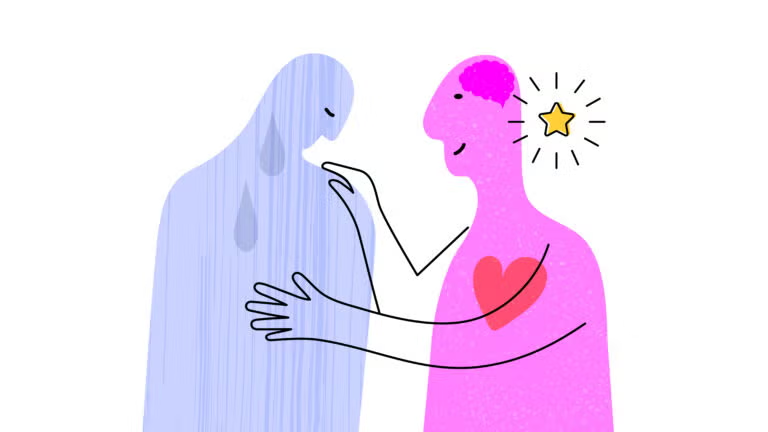

I remember the first time I learned that some view empathy as a dirty word; it was also the first time I began to learn how its meaning can be distorted and misunderstood.
It was 2020, that dumpster fire of a year, and I was extolling the importance of the virtue in a conversation with a friend. Surprisingly, he pushed back, calling the term “woke” and “politically correct.” When I asked what word he’d prefer, he said, “sympathy,” and then he tried to make the case that this was a more “biblical” word.
Confused, I also couldn’t suppress an internal eyeroll. I get tired of the various ways Christians bypass basic humanity in a misguided effort to be more “biblical.” Despite having my hackles up, however, I decided to press on. In this instance, it wasn’t as hard because my friend and I had a high amount of respect for each other.
And so, although difficult, we both decided to pause, check our reactions, and listen. Good questions followed that helped us unpack how we were defining our terms, as well as the experiences that were fueling our perspectives. In the end, because we both chose to be curious rather than dismissive, we learned a few things.
For me, defining “empathy” was simple and essential. Empathy is feeling another person’s pain, walking a mile in their shoes. I had spent a good bit of my career with National Fatherhood Initiative writing curricula that held up self-awareness and empathy as two of the most foundational qualities for being a healthy human. Without them, it was impossible to move forward in one’s growth. For example, in working with incarcerated fathers, here are some of the content and questions we used to get the concept of empathy across:
Empathy is being able to feel and understand another’s situation and feelings. A key mark of maturity is being able to take responsibility for ways you have hurt your family. You must understand how your behavior affects, or will affect each family member. The following exercise is difficult, but will help you do this. Don’t be tempted to rush through it. Feeling your family’s pain [empathy] will help you change from the inside out. Do your best to put yourself in the shoes of each family member and write out answers to the following questions.
Be as honest as you can:
- How did my behavior before incarceration affect my spouse, children, and/or extended family?
- What would they remember about how I behaved?
- How could my past behavior still be affecting them today?
- How did my arrest and trial affect my family?
- How do they explain my absence?
- What has changed in my family since I went to prison?
- What is it like for them to visit me (e.g. waiting in line, getting searched, etc.)?
- What do they sacrifice to visit me?”
My friend resonated with this definition and the examples, and we discovered he was coming from a totally different reference point. He saw empathy in the current cultural climate being used to say something like, “If you haven’t experienced exactly what someone else has, you have nothing valuable to offer.” For example, someone might say, “Unless you’ve shared in the black experience, you have no part in the conversation.” I acknowledged his point, and we both realized our definitions of empathy were radically different. Indeed, I fully agreed that you don’t have to have gone through the same experience as another person to help them. Or, said differently, you don’t have to have shared the same life experience as someone to offer wisdom or valuable expertise. For example, must an oncologist have gone through cancer herself to treat cancer patients effectively? Of course not. She just needs to be a good doctor.
Next week: Why Empathy Isn’t the Endgame, Part 2 of 2